Simple kitchen tests can catch crude adulteration, like vanaspati or palm oil mixed into ghee. But some adulteration is harder to spot with a spoon and a flame. Here is what to look for beyond the basic home tests.
Why home tests only catch the obvious cases
The classic double-boiler and palm tests can reveal ghee that is heavily cut with vanaspati or cheap vegetable oil, because these fats behave differently when melted or rubbed between fingers. But a small percentage of blended oil, or fat from a different animal source, is much harder to detect this way, especially once the ghee has been flavored or colored.
Read the label, not just the front of the jar
Check the ingredients list, not just the product name. Genuine ghee should list only one ingredient, milk fat or cream, sourced from cow or buffalo milk. If you see vegetable oil, palm oil, or any blended fat listed, it is not pure ghee, regardless of how the packaging is worded. Also check for an FSSAI license number, which is legally required for any food product sold in India.
Look for lab test documentation
Reputable ghee brands should be able to show lab test reports confirming purity, free fatty acid content, and the absence of adulterants. Hichkie lab-tests every batch of ghee before it ships. If a brand cannot produce any documentation of testing, that is a reasonable point of caution.
Price is a real signal
Genuine A2 bilona ghee costs more to produce than factory ghee, since it takes roughly 25 to 30 litres of milk and a full day of hand-churning to produce a litre of ghee. If a jar of ghee is priced dramatically below the typical market range for A2 or bilona ghee, that price gap usually comes from somewhere, whether it is a cheaper milk source, a faster industrial process, or added fillers.
The danedar texture as one signal, not proof
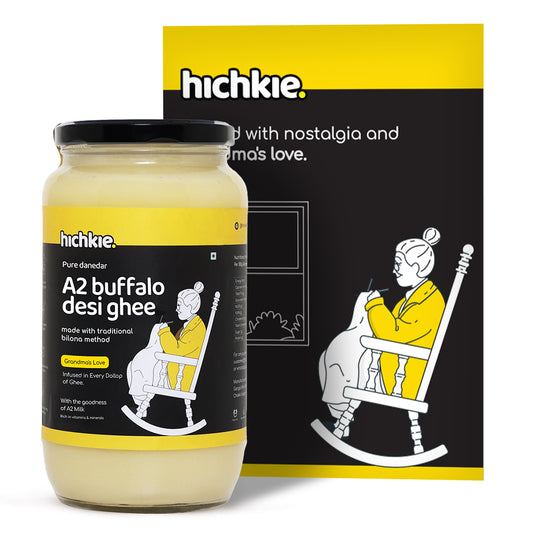
Pure, slow-clarified ghee often develops a grainy, crystalline texture called danedar, especially in cooler weather. This texture is a reasonably good sign of traditional processing, but its absence is not automatically proof of adulteration, since factors like storage temperature also affect it.
Frequently asked questions
Is it legal to sell adulterated ghee in India?
No, adulterating ghee with vanaspati, palm oil, or other fats without disclosing it violates FSSAI food safety regulations and is illegal.
Can lab tests be faked?
Documentation can be misrepresented by any brand, which is why buying from brands with a track record, verifiable licensing, and transparent sourcing matters more than any single test.
Does a higher price guarantee pure ghee?
No, but an unusually low price for claimed A2 or bilona ghee is a reasonable red flag given the real cost of producing it.
Explore Hichkie's A2 Cow Ghee, lab-tested every batch with no additives.