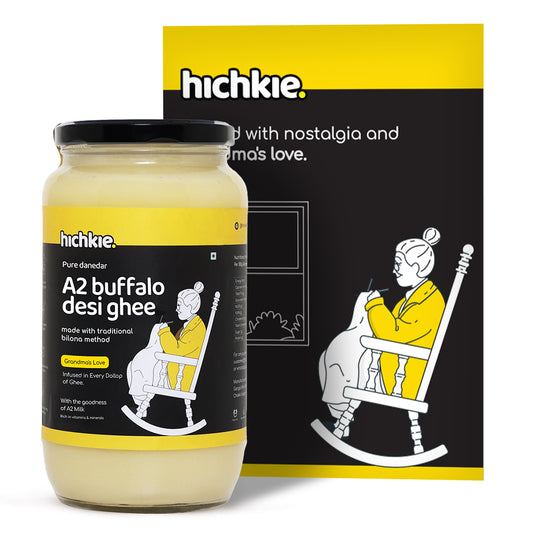
A1 and A2 refer to a type of protein in milk called beta-casein. Indigenous Indian cow breeds produce mostly A2 beta-casein, while many hybrid breeds produce A1. A2 milk, and the ghee made from it, is often described as easier to digest.
What the difference actually is
Beta-casein is one of the main proteins in milk. A tiny genetic difference changes one amino acid, giving either the A1 or the A2 form. Native Indian breeds carry the A2 gene, while high-yield hybrid cows often carry A1.
Why people choose A2
When A1 milk is digested, it can release a peptide called BCM-7, which some people find harder on their stomach. A2 milk does not release it the same way, which is why many who feel heavy after regular dairy find A2 gentler. Research is still ongoing, so treat it as a preference many buyers report, not a medical claim.
What this means for ghee
Ghee made from A2 milk carries that same A2 profile. Paired with the bilona method, it is the combination traditional ghee lovers look for. Our A2 cow ghee is made only from indigenous-cow A2 milk.
Frequently asked questions
Is A2 milk healthier than A1?
Many people find A2 easier to digest. The science is still developing, so it is best seen as a gentler option many prefer rather than a proven cure.
Which cows give A2 milk?
Indigenous Indian cow breeds naturally produce A2 milk.