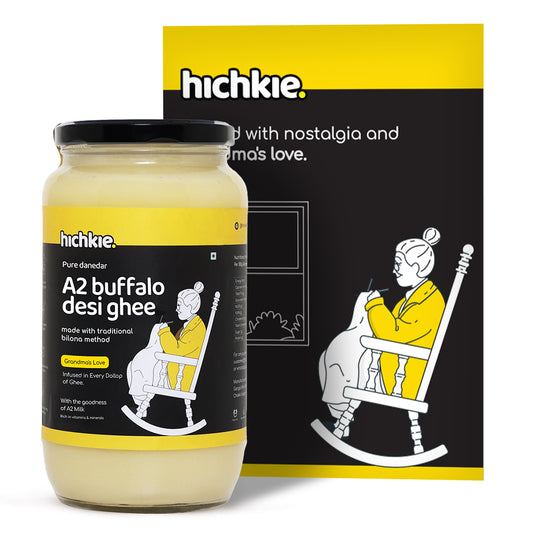
The bilona method is the traditional way of making ghee: whole milk is set into curd, the curd is churned into butter, and the butter is slowly simmered into ghee. It is slower and yields less than the factory route, which is exactly why bilona ghee smells, tastes, and sets the way real ghee should.
How bilona ghee is actually made
It starts with whole milk, not cream. The milk is cultured into curd overnight, then hand-churned to separate the butter, or makhan. That butter is simmered on a low flame until the milk solids settle and the ghee turns clear and golden. Nothing is rushed and nothing is added.
How it differs from factory ghee
Most commercial ghee skips the curd stage entirely. Cream is separated from milk and boiled straight into ghee. It is faster and cheaper, but it misses the fermentation that gives bilona ghee its aroma and grainy danedar texture.
Why it costs more
Bilona is labour and time. It takes far more milk per litre of ghee, plus hours of churning and slow cooking. You are paying for a method that machines cannot shortcut, and for the flavour and digestibility that come with it.
How to spot real bilona ghee
Look for the words curd-churned next to bilona, a stated A2 or indigenous-cow claim, a grainy set, and a strong nutty aroma. Every jar of our A2 cow ghee is made this way and lab-tested for purity.
Frequently asked questions
What does bilona mean?
Bilona refers to the traditional churning process where curd is churned into butter, which is then simmered into ghee.
Is bilona ghee better than regular ghee?
Many people prefer it for its aroma, grainy texture, and digestibility, because it keeps the goodness that the quick cream-boil method strips away.