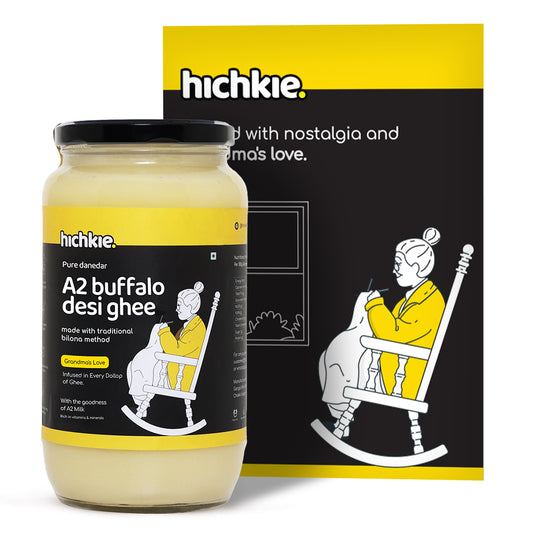
Cow ghee is lighter and better for everyday use, while buffalo ghee is richer, denser, and better for festive cooking and sweets. Both are pure ghee made from milk, but the milk they come from gives each a different character.
How they differ
Buffalo milk has a higher fat content than cow milk, so buffalo ghee is thicker, whiter, and more full-bodied, with a higher smoke point. Cow ghee is golden, lighter, and more aromatic. Think of cow ghee as your daily ghee and buffalo ghee as the richer, celebratory one.
Which to use when
Reach for cow ghee for everyday dal, roti, and tempering, and for anyone who prefers a lighter feel. Reach for buffalo ghee for mithai, festive frying, and dishes that want a deeper, richer note. Many families simply keep both.
What stays the same
Whichever you choose, the method matters most. Both should be bilona-made, curd-churned, and lab-tested, with no vanaspati or blended oils. Explore our A2 buffalo ghee and A2 cow ghee, both made the traditional way.
Frequently asked questions
Which is healthier, cow or buffalo ghee?
Both are nourishing in moderation. Cow ghee is lighter; buffalo ghee is richer and higher in fat, so portion size matters more.
Is buffalo ghee better for cooking?
Its higher smoke point and richness make it excellent for high-heat cooking and sweets, while cow ghee suits lighter daily use.