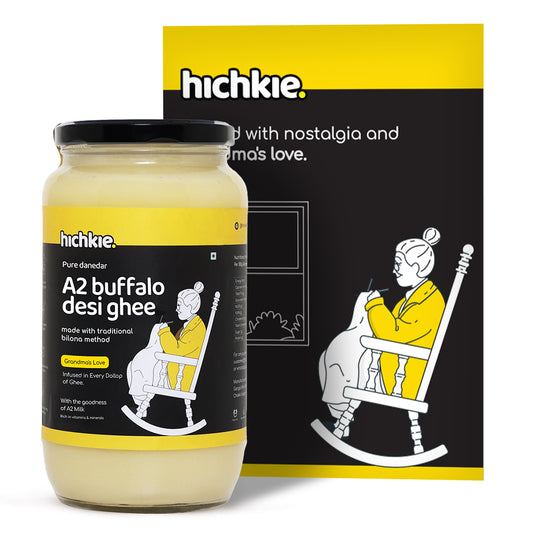
Most people who are lactose intolerant can eat ghee, because making it removes nearly all the lactose and milk solids. What remains is essentially pure butterfat, which contains only trace amounts of lactose.
Why ghee is different from milk and butter
Lactose is the sugar in milk that causes discomfort for those who cannot digest it. When butter is simmered into ghee, the water evaporates and the milk solids, where the lactose and casein sit, are strained out. That leaves ghee with only trace lactose, far less than milk or butter.
What this means for you
Many people with lactose intolerance use ghee comfortably in everyday cooking. If you are highly sensitive, start with a small amount and see how you feel, and choose a pure, lab-tested ghee so there are no added milk solids or blends.
A quick clarification
Lactose intolerance and a dairy (milk protein) allergy are not the same thing. Ghee is low in lactose, but if you have a diagnosed dairy allergy, check with your doctor before using it.
Frequently asked questions
Does ghee have lactose?
Only trace amounts. The milk solids that hold lactose are removed when ghee is made, so it is far lower in lactose than milk or butter.
Is ghee safe for a dairy allergy?
Lactose intolerance and a dairy allergy are different. If you have a milk-protein allergy, consult your doctor first.
Our lab-tested A2 cow ghee is pure butterfat with nothing added.