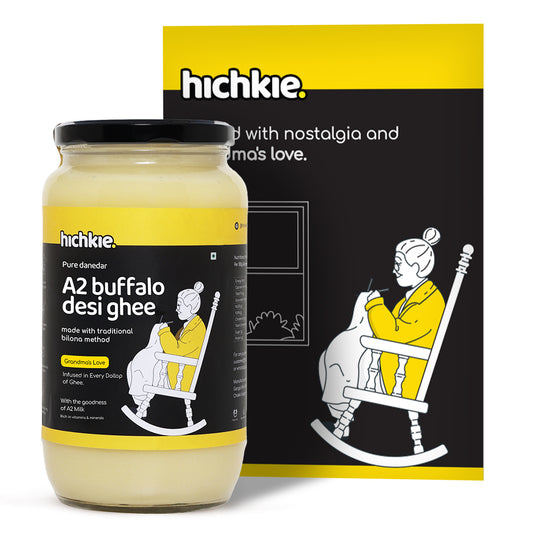
A2 ghee comes from the milk of cows that produce the A2 type of beta-casein protein, while regular ghee usually comes from mixed or hybrid-breed milk. A2 ghee costs more because it takes more milk, more time and often more testing. Whether that is worth it depends on what you care about.
What is actually different
- The milk: A2 ghee comes from indigenous breeds that naturally give A2 milk. Regular ghee is often made from mixed-breed milk.
- The method: many A2 ghees are made by the slow bilona method, where milk is set into curd and churned. Regular ghee is commonly boiled from separated cream, which is faster and cheaper. Read the bilona method explained.
- The yield: indigenous cows give less milk, and it takes roughly 25 to 30 litres of milk to make one litre of ghee, which raises the price.
What is not proven
Many people say A2 milk is gentler on digestion, and A2 is valued in Ayurveda. Research on A2 specifically is still limited, and ghee has far less milk protein than milk. So treat digestive benefits as a personal preference, not a guarantee. See our guide to A1 vs A2 milk.
Is the price difference worth it?
A2 ghee is worth considering if you use ghee daily and value traditional methods, aroma and traceable testing. If you only use a spoonful now and then, a good-quality regular ghee may be enough. Either way, judge a ghee by the method, a batch lab report and the packaging, not only the word A2. Our buyer's checklist shows how, and the price guide explains what you pay for.
Try A2 ghee
- A2 Cow Ghee 100 ml, a trial jar
- A2 Cow Ghee 500 ml and 1 litre
Frequently asked questions
Is A2 ghee healthier than regular ghee?
Both are butterfat and should be enjoyed in moderation. Claims that A2 ghee is much healthier are not firmly proven, so choose it for quality and method.
Why is A2 ghee more expensive?
Indigenous cows give less milk, ghee needs a lot of milk per litre, and traditional methods and testing add cost.
How do I know an A2 ghee is genuine?
Check for indigenous-cow sourcing, the method on the label, a batch lab report and glass packaging.