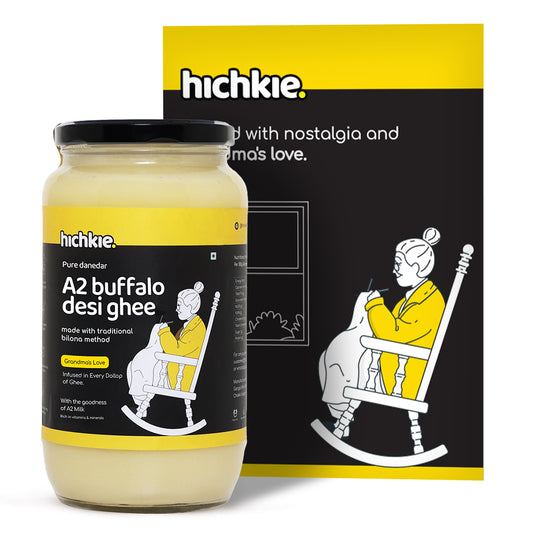
Ghee is a natural, minimally processed fat with a high smoke point, while most refined oils are chemically processed and stripped of nutrients. For traditional Indian cooking, ghee is the more wholesome choice in moderation, though it is higher in saturated fat.
How they are made
Ghee is simply simmered butter, with nothing added. Refined oils are extracted with heat and often chemical solvents, then bleached and deodorised, which removes flavour and many nutrients. That processing is the core difference.
Cooking performance
Ghee has a high smoke point of around 250C, so it stays stable at high heat without breaking down into harmful compounds. Many refined oils have lower smoke points and can oxidise when overheated. Ghee also adds a rich, nutty flavour that refined oils cannot.
The honest trade-off
Ghee is higher in saturated fat, so portion size matters, especially if you are watching heart health. Used in sensible amounts in place of refined oil, it is a natural, flavourful, nutrient-carrying fat. Balance is the key.
Frequently asked questions
Is ghee better than refined oil?
Ghee is less processed, higher in fat-soluble vitamins, and more stable at high heat. It is higher in saturated fat, so use it in moderation.
Can I deep-fry in ghee?
Yes. Its high smoke point makes ghee well suited to frying, though it is richer and pricier than oil.
Cook with pure, bilona-made A2 cow ghee, lab-tested for purity.