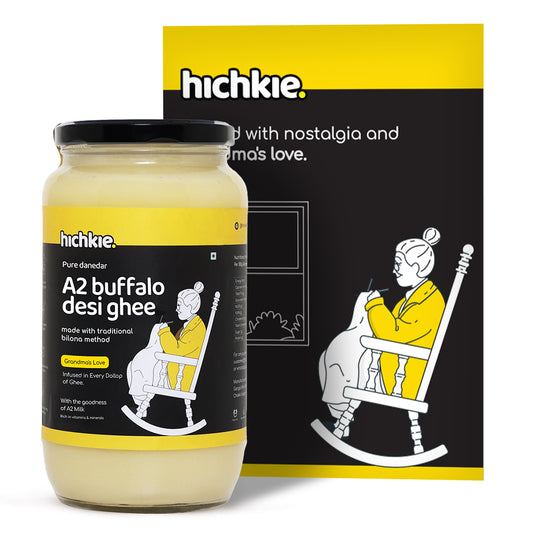
Ghee is butter with the water and milk solids removed, leaving pure butterfat. That single difference gives ghee a higher smoke point, a longer shelf life, and almost no lactose or casein, which is why many people who react to butter can still enjoy ghee.
What is actually different
Butter is about 80% fat, with water and milk solids making up the rest. To make ghee, butter is simmered until the water evaporates and the milk solids are removed, leaving roughly 99 to 100% pure butterfat with a deep, nutty aroma.
Cooking: ghee wins on heat
Ghee has a high smoke point of around 250C, so it stays stable for frying, sauteing, and tempering, where butter would burn. It also does not need refrigeration and keeps for months, while butter spoils faster.
Health and digestion
Because the milk solids are gone, ghee is very low in lactose and casein, which makes it friendlier for many people with dairy sensitivity. Both are rich in fat-soluble vitamins, and ghee is more concentrated. As with any fat, use it in moderation.
Frequently asked questions
Is ghee healthier than butter?
Ghee is purer butterfat with a higher smoke point and almost no lactose, which suits high-heat cooking and dairy-sensitive diets. Both should be used in moderation.
Can I use ghee instead of butter?
Yes, in most cooking. Use slightly less ghee than butter since it is pure fat, and expect a richer, nuttier flavour.
Prefer pure, bilona-made ghee? Explore our A2 cow ghee, curd-churned and lab-tested.