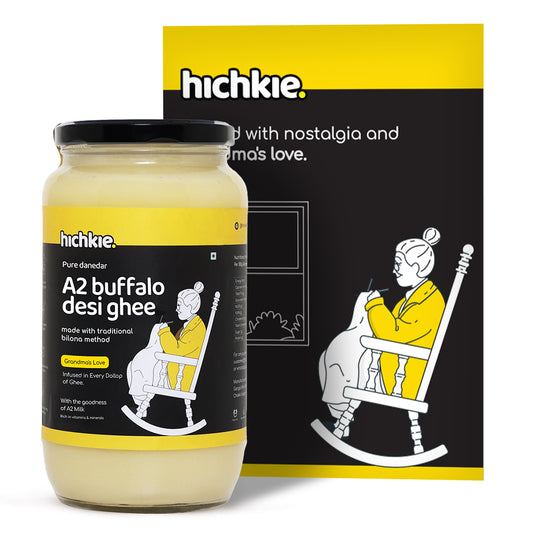
Yes, ghee is well suited to the monsoon. The rainy season is when digestion tends to feel sluggish, and ghee is a warming, easy-to-digest fat that Ayurveda has long recommended to keep the gut and immunity steady when the weather turns damp.
Why ghee suits the rainy season
Monsoon humidity can weaken appetite and digestion. A little ghee helps stimulate digestion, keeps meals nourishing, and carries fat-soluble vitamins A, D, E, and K that support immunity when infections are more common.
Simple ways to use it
Add a spoon to warm khichdi or dal, temper your vegetables in it, or stir a little into warm milk at night. Warm, home-cooked, lightly spiced food with a touch of ghee is exactly the kind of eating the season calls for.
Keep it pure
In a humid season, purity matters even more, since adulterated fats sit heavier and spoil faster. Choose a lab-tested, bilona-made ghee such as our A2 cow ghee, and store it sealed in a cool, dry place.
Frequently asked questions
Is ghee good during the rainy season?
Yes. In small amounts it is warming, aids digestion, and supports immunity, which suits monsoon eating.
How should I store ghee in the monsoon?
Keep it sealed in a cool, dry place and always use a dry spoon to avoid moisture.