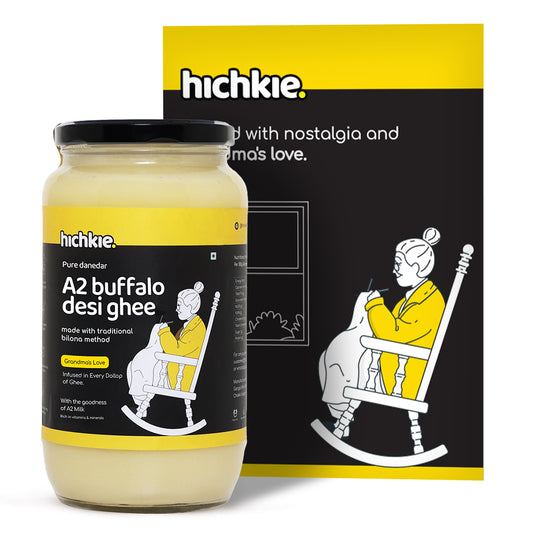
Ayurveda calls ghee "Ghrita" and treats it as one of the most valuable substances in its entire system, used in cooking, in healing preparations, and in rituals. The nickname "liquid gold" is not just marketing, it reflects thousands of years of a specific cultural and medical tradition. Here is what that tradition actually says.
Ghee as "sattvic" food
In Ayurveda, food is classified by its quality or guna, and ghee is considered sattvic, meaning pure, clarifying, and beneficial for both body and mind. Ayurvedic texts describe ghee as balancing for all three doshas (Vata, Pitta, and Kapha) when used in moderation, which is part of why it holds a uniquely central place compared to other fats.
Ghee as a carrier in Ayurvedic medicine
Ayurveda uses ghee as an "anupana," or carrier substance, believed to help deliver the properties of herbs deeper into the body's tissues. This is the basis for classical preparations like medicated ghee, where herbs are infused into ghee over a slow cooking process. This use is specific to Ayurvedic practice and not the same as ghee used in everyday cooking.
Ghee in Panchakarma and traditional cleansing
Ghee plays a central role in Panchakarma, Ayurveda's classical detoxification process, particularly in a practice called "Snehapana," where increasing doses of ghee are consumed under supervision to help loosen toxins before further cleansing steps. This is a supervised clinical practice within Ayurveda, not something to replicate casually at home.
Why the bilona method matters in this tradition
Ayurvedic ghee-making has historically followed the same slow, curd-churned process that Hichkie still uses today, rather than the fast, cream-boiled method common in factories. The bilona method is described in classical texts as producing a more potent and digestible ghee, aligned with Ayurveda's broader preference for minimally processed, traditionally prepared foods.
Modern science and ancient claims
Some elements of Ayurvedic thinking around ghee, like its fat-soluble vitamin content and its role in nutrient absorption, align with modern nutritional science. Other claims, particularly around Panchakarma and medicated ghee's specific therapeutic effects, are rooted in a traditional medical system that has not been extensively validated by modern clinical research. Both traditions can be respected without conflating one for the other.
Frequently asked questions
What does Ghrita mean in Ayurveda?
Ghrita is the Sanskrit and Ayurvedic term for ghee, referring specifically to clarified butter used in both cooking and medicinal preparations.
Is medicated ghee the same as regular cooking ghee?
No, medicated ghee involves infusing specific herbs into ghee through a specialized process for therapeutic use in Ayurveda, distinct from ghee used for everyday cooking.
Should I try Panchakarma or Snehapana on my own?
No, these are supervised Ayurvedic clinical practices. Anyone interested should consult a qualified Ayurvedic practitioner rather than attempting them independently.
Explore Hichkie's A2 Cow Ghee, made the traditional bilona way and lab-tested for purity.